





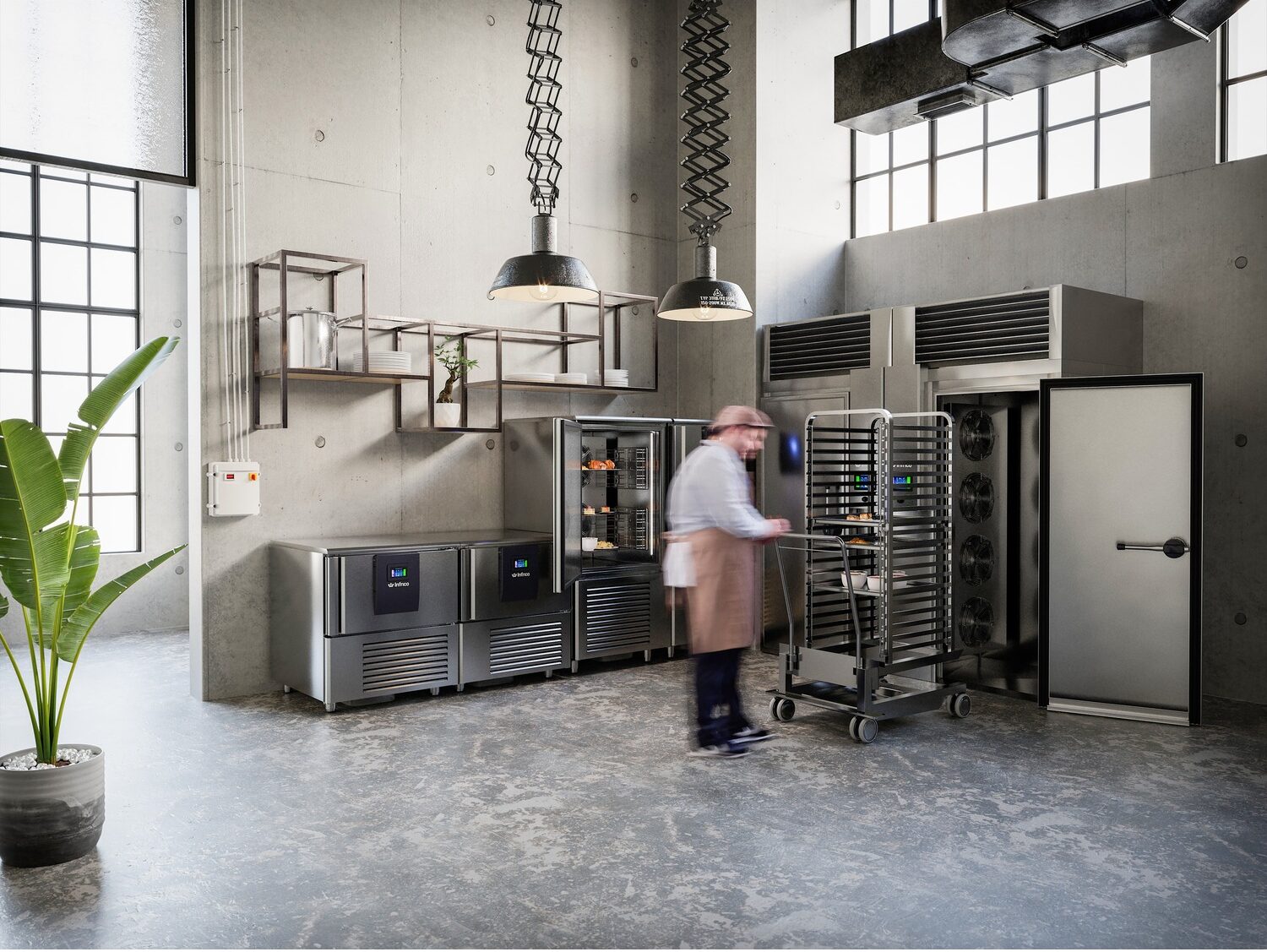
In a professional kitchen, controlling food temperatures is essential to ensuring food safety and optimising workflows. But how can you cool freshly prepared food quickly without compromising its quality?
A blast chiller is a professional refrigeration appliance designed to reduce food temperatures within a controlled period of time. Incorporating one into a professional kitchen helps improve production planning and makes the cooling process safer and more efficient.
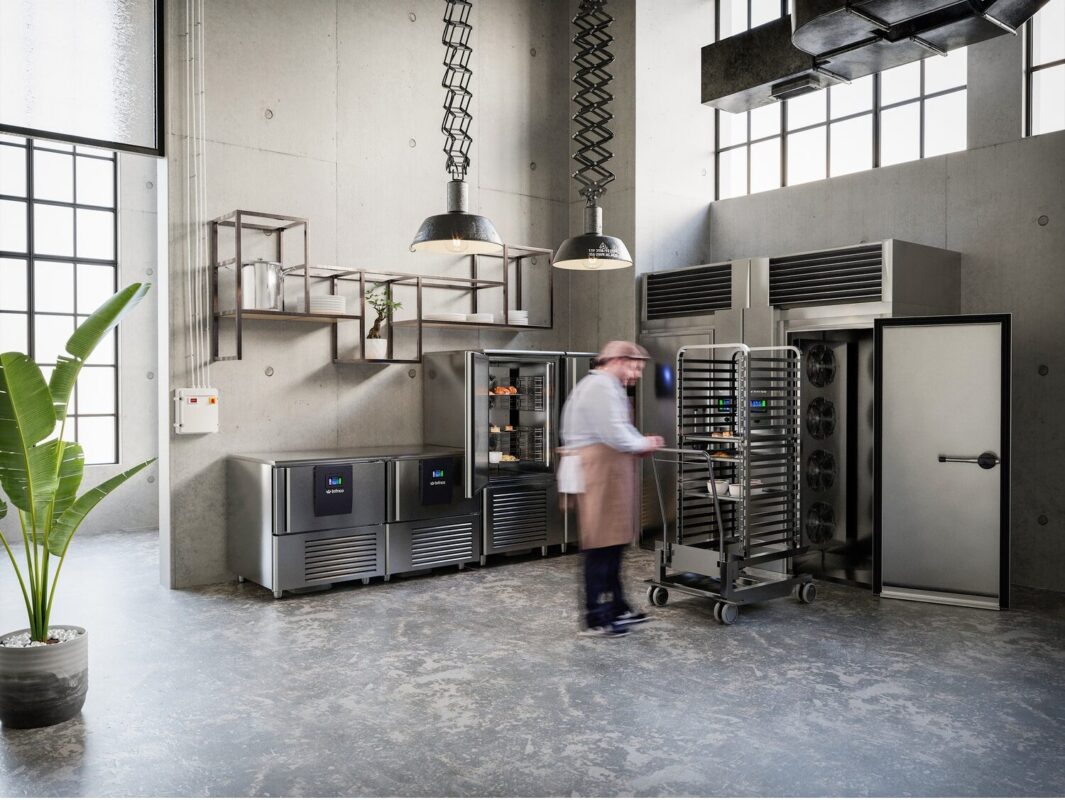
What Is a Blast Chiller?
A blast chiller is a professional appliance that rapidly cools food, particularly after cooking, reducing the time it spends within temperature ranges that encourage the growth of microorganisms.
Unlike a conventional refrigerator, which is primarily designed to keep food chilled, a blast chiller removes heat much more rapidly.
What is a blast chiller used for? Primarily, to improve food safety control, facilitate food preparation in advance and support more efficient kitchen operations.
Discover Infrico’s professional blast chillers.
How Does a Blast Chiller Work?
A blast chiller works by circulating cold air at high speed, enabling heat to be extracted rapidly from food. Depending on the model, the appliance allows operators to programme timed cycles or monitor the product’s core temperature using a temperature probe.
Why Is Rapid Cooling Important? The Critical Temperature Range
When cooked food is cooled slowly, it can remain for too long at temperatures that encourage the growth of certain microorganisms.
Rapid cooling is therefore an important food safety measure. Spanish regulations establish that, for hot prepared meals falling within their scope, the temperature at the centre of the product must be reduced from 65°C to 3°C in less than 120 minutes. Therefore, it is not just the blast chiller’s cooling capacity that matters, but also how the food is placed inside the unit and how it is prepared. For example, a 5 mm thick fillet will cool faster and more efficiently than one that is 10 cm thick.
Blast chilling helps control this process as part of an establishment’s food safety procedures.
Blast Chilling and Blast Freezing
Although closely related, these are two different processes:
- Positive blast chilling: rapidly reduces the temperature of food to a chilled storage temperature, typically around +3°C at the product’s core.
- Blast freezing: lowers the temperature of food to freezing levels, typically -18°C at the product’s core.
Both processes allow food to be prepared for subsequent storage under appropriate conditions.
Blast Chiller vs Freezer vs Refrigerator: What’s the Difference?
Although all three appliances use refrigeration technology, they perform different functions.
| Appliance | Main function |
|---|---|
| Blast chiller | Rapidly reduces the temperature of food. |
| Freezer | Freezes food or keeps products frozen, depending on the type of appliance. |
| Refrigerator | Stores food at chilled temperatures. |
The main difference between a blast chiller and a conventional freezer lies in their ability to extract heat rapidly. These appliances can complement one another in a professional kitchen, but they should not be used interchangeably without checking their specific capabilities.
What Temperature Does a Blast Chiller Reach and How Long Does It Take?
The time required depends on the appliance, the quantity of food and its characteristics.
As a reference, certain Infrico blast chillers can perform both positive blast chilling and blast freezing cycles.
| Process | Product temperature | Time |
|---|---|---|
| Positive blast chilling | From +65°C to +3°C | Less than 120 minutes |
| Blast freezing | From +65°C to -18°C | Less than 270 minutes |
Reference values in accordance with UNE-EN ISO 22042:2022.
It is important to distinguish between the air temperature inside the cabinet and the temperature reached at the core of the food, he latter being the most important.
Explore our blast chilling solutions.
How to Use a Blast Chiller: Step by Step
To achieve effective cooling, it is essential to follow these recommendations:
- Prepare the food: use suitable containers and avoid overloading them.
- Distribute the load correctly: leave sufficient space to allow cold air to circulate.
- Select the programme: choose positive blast chilling or blast freezing according to the type of food being prepared.
- Monitor the temperature: use the temperature probe when the appliance is equipped with one.
- Store the product: once the cycle is complete, keep the food under the appropriate storage conditions.
- Carry out maintenance: follow the manufacturer’s cleaning and maintenance recommendations.
Cook, Chill & Preserve: A New Way to Organise Your Kitchen
What if you could prepare your dishes in advance while maintaining complete control over the process?
The Cook, Chill & Preserve methodology brings together three essential stages:
- Cook: prepare and cook the food.
- Chill: rapidly reduce its temperature through blast chilling.
- Preserve: subsequently store it under controlled conditions.
This approach enables kitchens to organise production more effectively, plan food preparation and make more efficient use of resources.
In a professional kitchen, combining technology with appropriate procedures can help reduce food waste, improve team coordination and maintain consistent service standards.
Discover how to integrate Cook, Chill & Preserve into your kitchen with Infrico.
Frequently Asked Questions About Blast Chillers
What is a blast chiller used for?
To cool food rapidly, control the cooling process and facilitate subsequent storage.
How long does a blast chiller take to cool food?
This depends on the model and the type of food. Some Infrico appliances complete positive blast chilling cycles in less than 90 minutes under specified conditions, exceeding the requirements set out in the reference standard UNE-EN ISO 22042:2022.
Can hot food be placed directly into a blast chiller?
Yes, provided the appliance’s operating conditions and capacity limits are respected.
Can a blast chiller replace a refrigerator?
Never. A blast chiller rapidly reduces food temperatures, whereas a refrigerator maintains food at chilled storage temperatures.
Infrico: Technology for a More Efficient Kitchen
Blast chilling is a valuable tool for improving process control, food safety and production planning.
With its blast chilling and blast freezing solutions, Infrico helps professionals integrate refrigeration technology into every stage of their kitchen operations.